On this page
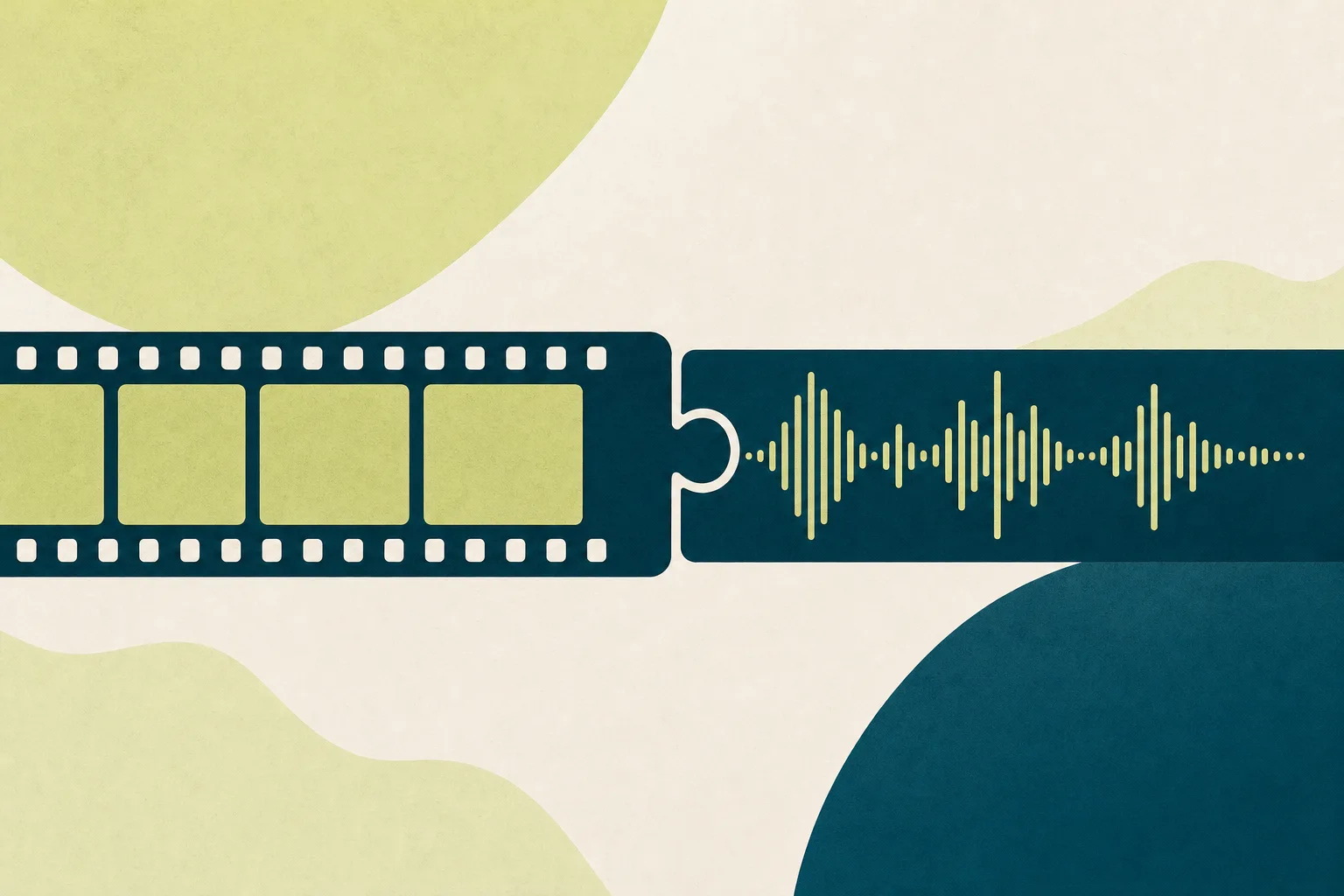
A sync license (short for synchronization license) is permission from the owner of a song's composition to pair that music with moving images: a film, a TV show, an ad, a video game, an app or a social video. To use a specific recording of the song, you also need a master use license from whoever owns that recording. Most projects need both, and using music in video without them is copyright infringement, even if the clip is short or the video earns nothing.
This guide explains what a sync license covers, how it differs from the other music licenses, how to get one, what it costs, and how pre-cleared music removes most of the work.
What is a sync license?
Every piece of recorded music carries two separate copyrights:
The composition: the melody and lyrics, owned by the songwriters and usually administered by their music publishers.
The sound recording (the "master"): the specific recorded performance, owned by the label or the artist who paid for it.
A sync license covers the composition. It lets you "synchronize" the song with visual media, meaning the music plays in timed relation to the picture. The name dates from film, where sound was literally synchronized to the frames, but it now applies to any audiovisual use: streaming series, YouTube videos, Instagram Reels, TikToks, games, apps and product demos.
The license sets out exactly what you may do: which project, which media and platforms, which territories, for how long, and how much of the song you may use.
Sync license vs master use license
The two are easy to confuse because you usually need them together.
Sync license: granted by the publisher (or songwriter) who controls the composition. It covers the song itself.
Master use license: granted by the label (or artist) who owns the recording. It covers that particular recording of the song.
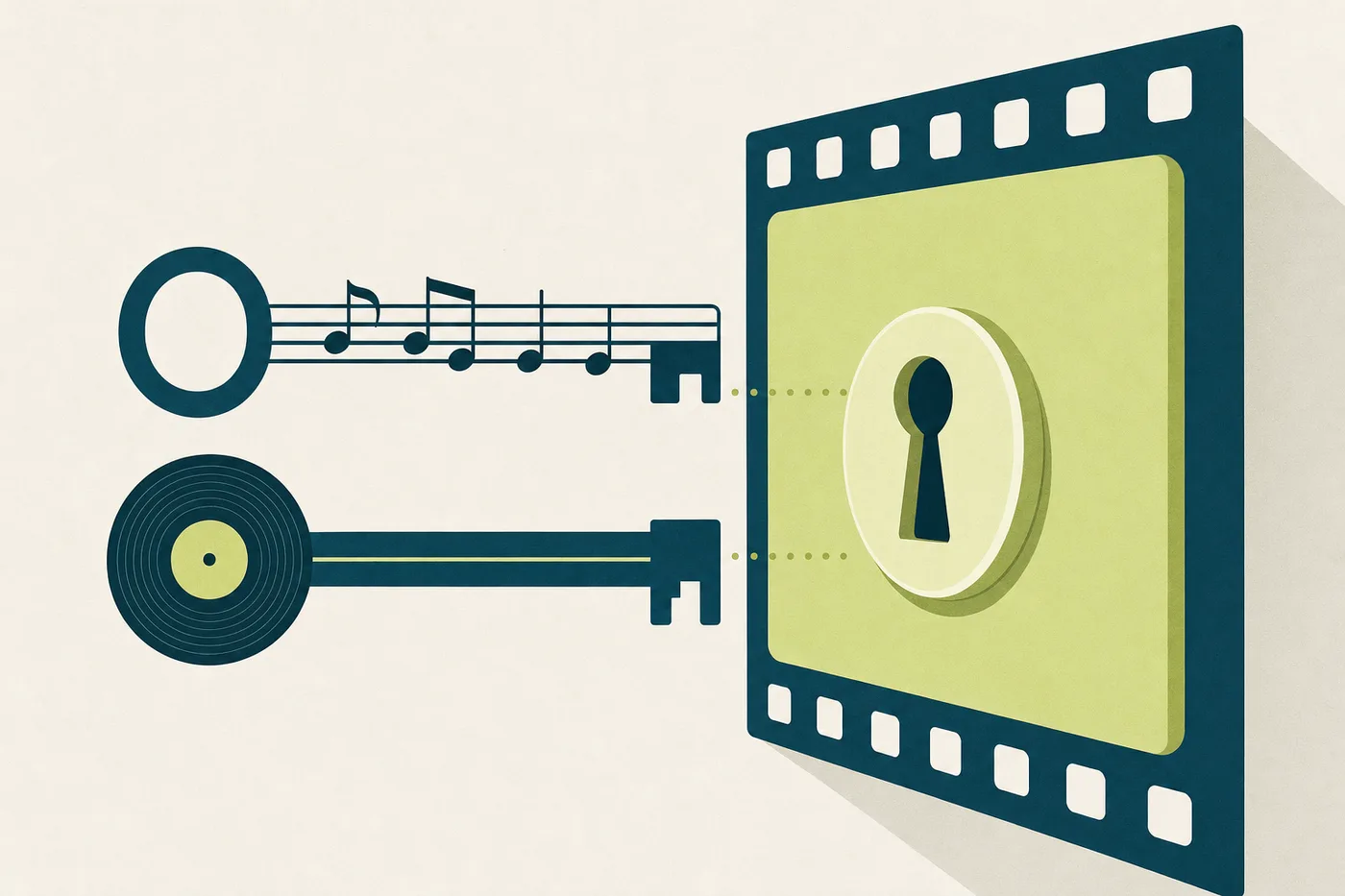
If you want to use the original recording of a song in your video, you need both. If you record your own cover version, you need only the sync license, because you made the recording yourself. If a song has several writers with different publishers, each publisher's share has to be cleared.
Other music licenses you will hear about
Sync and master licenses are the two that matter for video, but you will meet others:
Mechanical license: permission to reproduce a composition in audio-only form, such as releasing a cover song or distributing it on streaming services. In the US, mechanical licenses for the composition are available on set terms, and digital services license them in bulk through the Mechanical Licensing Collective (The MLC).
Public performance license: permission to perform music in public, including broadcasting and streaming it. It is issued by performing rights organizations such as ASCAP, BMI, SESAC and GMR in the US, and is usually held by the venue, broadcaster or platform rather than by the person who made the video.
Print license: permission to reproduce sheet music or lyrics.
When do you need a sync license?
You need one whenever existing music plays alongside moving images that you publish or distribute. Common cases:
Films, documentaries and TV programs
Advertising and commercials, online or broadcast
YouTube videos, Reels, TikToks and other social video
Video games and in-game trailers
Apps and software that play music over video or let users export video with music
Corporate, training and event videos
Video podcasts
Audio-only uses, such as a podcast with no video, are not technically "sync". You still need permission from both rights owners; it is just a different license.
How to get a sync license, step by step
Identify the song and the exact recording you want. Note the title, the writers and the artist.
Find the publishers. Search the performing rights organizations' repertoire databases (ASCAP and BMI share a combined search called Songview) and The MLC's public work search. These list the writers, the publishers and their percentage shares.
Find the master owner. The label is usually listed on streaming services, in the release credits or in the liner notes.
Send a request to each rights holder. Describe the project, where it will appear, the territories, the term, how long the excerpt runs, how prominently it is used (background or featured) and your budget.
Negotiate the fee and terms. Publishers and labels may quote different amounts; many agree to match each other on a "most favored nations" basis.
Get it in writing before you publish. Keep the signed agreements for as long as the content is available, because you may need to prove the license years later.
For a well-known song, clearance can take weeks or months, and a rights holder can simply say no. That is why most product teams, agencies and creators work with pre-cleared music.
How much does a sync license cost?
There is no standard rate. The fee depends on:
How famous the song is. A chart hit costs far more than an independent track.
The use. A national TV ad pays more than a student film or a YouTube video.
Prominence. Featured or opening-title use costs more than background music.
Duration and term. Longer excerpts and longer licenses cost more.
Territory and media. Worldwide, all-media rights cost more than one platform in one country.
As a rough guide, independent and production-library music can cost from nothing to a few hundred dollars per use, while a well-known song in a major advertising campaign can run into five or six figures, and that is often for the sync license alone, before the master use license.
One-stop and pre-cleared music
A one-stop track is one where a single party controls both the composition and the recording, so one agreement covers both rights. Pre-cleared music goes a step further: the rights are cleared before you ever ask, on published terms, so you can license a track immediately rather than negotiating.
This is how The Rights Foundry works. Every track in the catalog is cleared for both the recording and the composition, licensed directly from the artists and rights holders who made it. You search 110,000+ tracks by mood, genre, tempo or instrumentation, license a track once, and use it worldwide within the media the license covers, with no ongoing royalties or reporting. The details are on our licensing page.
Common sync licensing mistakes
Assuming "royalty-free" means "no license". Royalty-free music still comes with a license; it just has no ongoing royalties. Read what it covers.
Relying on a "few seconds" rule. There is no length of clip that is automatically safe to use. Short excerpts can still infringe.
Clearing only half the rights. A sync license without a master use license (or the reverse) does not let you use the original recording.
Ignoring the term and territory. A license limited to one year or one country does not cover a video that stays online worldwide.
Treating a content claim as proof you are unlicensed. Platforms such as YouTube identify music automatically, so a licensed track can still be flagged. Keep your license so the claim can be released.
Key takeaways
A sync license is permission from the composition owner to use a song with moving images.
To use an existing recording, you also need a master use license from the recording owner.
Fees depend on the song, the use, the prominence, the term and the territory.
Clearing a famous song takes time and can be refused; pre-cleared, one-stop music removes the negotiation.
Questions
What is a sync license in music?
A sync (synchronization) license is permission from the owner of a song's composition, usually the music publisher, to use that song in timed relation to moving images such as a film, TV show, ad, game, app or online video. It covers the song itself, not a particular recording of it.
What is a master use license?
A master use license is permission from the owner of a specific sound recording, usually the record label or the artist, to use that recording. To use an existing recording of a song in a video, you need both a master use license and a sync license.
Do I need a sync license for YouTube videos?
Yes, if you use music you do not own in a video, you need permission from both rights owners, whether or not the video is monetized. The exceptions are music whose license already covers YouTube, such as tracks from YouTube's Audio Library or from a licensing service whose terms include online video.
How much does a sync license cost?
There is no standard rate. Independent and production-library music can cost from nothing to a few hundred dollars per use, while a well-known song in a major ad campaign can cost five or six figures. The fee depends on the song's fame, the type of use, prominence, duration, term and territory.
Who grants a sync license?
The publisher, or the songwriter if they self-publish, grants the sync license for the composition. If several writers share a song, each of their publishers must agree. The master use license comes separately from the owner of the recording.
Is there a 7-second rule for using music?
No. There is no length of clip that is automatically safe to use without permission. Short excerpts can still infringe copyright, so even a few seconds of someone else's music needs a license.
Does royalty-free music include a sync license?
Usually, yes: a royalty-free license normally lets you use the track in video without paying royalties per view. Royalty-free still means licensed, though, so check which media, platforms and uses the license covers before you publish.